

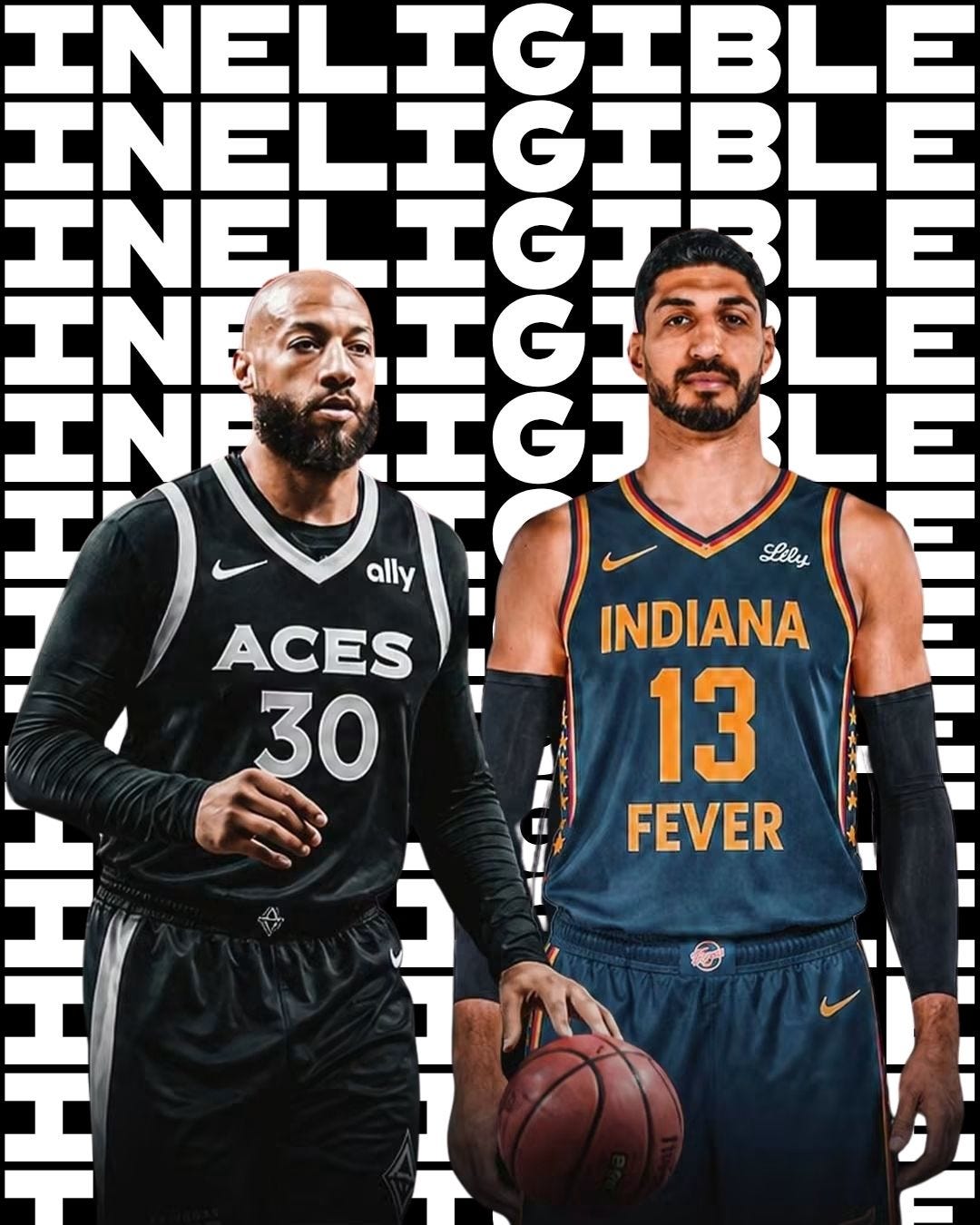
This is for my Straight Guy Basketball Fan Friends debating this in my Group Chats.
There is a flaw in the way we have been arguing about identity. One side wants identity to be something assigned to us, usually by biology, history or an institution. The other side frequently responds that identity is something we possess the agency to declare for ourselves. Inclusionism offers another way of thinking about the problem. Identity is neither merely assigned nor merely declared. Identity accumulates. Identity has provenance.
Human beings accumulate interactions, relationships, recognition, agency, participation and consequences around who we understand ourselves to be. We live through identities. We negotiate them with other people. We organize parts of our lives around them. Institutions recognize some of them and reject others. Communities contest them, reinforce them and sometimes change their meaning. This is why identity cannot adequately be reduced to either a chromosome or a checkbox. Identity has a history.
That does not mean someone needs permission from an institution to become who they are. Quite the opposite. Agency is fundamental to Inclusionism. But self-determination and self-declaration are not necessarily the same thing. Self-determination describes the exercise of agency over one’s life. A declaration is an expression. The declaration may be evidence of identity, perhaps very powerful evidence, but the words themselves do not necessarily constitute the entirety of the identity.
The WNBA has unexpectedly given us an extraordinary case through which to examine this distinction.
Former NBA players Enes Kanter Freedom and Royce White have publicly declared themselves women while seeking eligibility to play in the WNBA. Their declarations were not presented as stories of gender transition or emerging gender identity. They were explicitly connected to a political and cultural argument about transgender participation in women’s sports. White described identifying as a woman for purposes connected to basketball, while Freedom has publicly used his declaration to challenge the implications of allowing gender identity to determine eligibility.
The WNBA’s answer has essentially been: no.
And that “no” is philosophically much more interesting than it initially appears.
The WNBA’s collective bargaining agreement says that only players who are women are eligible to play in the league. Yet the publicly available language does not provide us with a comprehensive definition of “woman.” It does not simply say chromosomes. It does not simply say sex assigned at birth. It does not simply say gender identity. It does not give us an obvious formula that turns the category of woman into an administratively objective test.
Nevertheless, league sources have reportedly treated the declarations by Freedom and White as publicity stunts rather than legitimate questions of player eligibility.
Think about what has happened.
Two people supplied the institution with the statement: I am a woman.
The institution effectively responded: We do not recognize that claim as establishing that you are a woman for purposes of participation in this league.
Something therefore exists between declaration and recognition.
That something is what interests me.
I am familiar with some of the consultants who have participated in the listening and advisory conversations around these issues through my own professional relationships and work. These are difficult conversations involving questions of inclusion, organizational governance, employment, identity, fairness and the preservation of women’s institutions. I do not envy anyone responsible for turning all of that into an operational rule. But the difficulty itself reveals why organizations need something more sophisticated than political slogans from either side.
The conservative challenge has famously become: “What is a woman?”
The progressive answer is frequently characterized, fairly or unfairly, as: “Anyone who identifies as one.”
I think both formulations can miss something fundamental about how human identity actually works.
Inclusionism asks a different question: What is the provenance of an identity?
Provenance is a familiar concept when we discuss art, information and data. It tells us where something came from, how it developed, what happened to it and the chain through which it arrived before us. Provenance does not determine whether something is morally good. It establishes context, continuity and relationship.
Human identity has provenance too.
That provenance can consist of interactions, self-understanding, relationships, participation, recognition, choices and consequences. None of these individually creates a universal test for womanhood, Blackness, disability, religion, nationality or any other identity. Different identities emerge through very different processes. The point is precisely that identity is not a database field with one universal validation rule.
Consider what makes the Freedom and White episode so revealing. We do not need to speculate about their private psychology. Their public behavior provides context for their declarations. The claims emerged specifically as challenges to transgender inclusion in women’s basketball. The asserted identity is being used instrumentally to test an institutional rule.
That is very different from saying that transgender people must demonstrate some prescribed number of years, medical procedures, hormones, documents or stereotypical behaviors before their identities become legitimate. Identity provenance is not an identity purity test.
A transgender woman who has never undergone surgery is not necessarily less of a woman than someone who has. A person who comes to understand their identity yesterday does not necessarily possess less agency than someone who understood it twenty years ago. Nor should governments or corporations become tribunals empowered to interrogate the authenticity of everyone’s inner life.
Provenance is not duration.
Provenance is not conformity.
Provenance is not institutional permission.
It is the recognition that identity exists within a history of human agency and interaction.
That distinction matters because otherwise self-identification becomes vulnerable to a very simple philosophical attack. If the entirety of identity is the declaration itself, then the person making the declaration appears to acquire the identity at the instant the words are spoken. Under that theory, Freedom and White have constructed a clever challenge: if declaration alone constitutes identity, what additional grounds permit the WNBA to reject their declarations?
But if identity is understood as an exercise of human agency with provenance, their challenge becomes much less compelling.
They have confused the label for the thing itself.
I can write “doctor” on a form without having practiced medicine. I can declare a political affiliation without ever having participated in that political community. I can adopt a religious identity today, and that declaration may indeed mark the authentic beginning of a new identity. What determines the meaning of each claim depends upon the nature of the identity, the agency of the individual, the relevant community and, where institutional privileges or responsibilities are attached, the legitimate purpose for which an institution needs to recognize the category.
This last point is especially important for the WNBA.
The WNBA does not need a universal metaphysical definition of woman that settles the question for all humanity. It needs an institutional definition sufficient to govern participation in a women’s professional basketball league.
Those are not the same problem.
A hospital may legitimately need information about biological sex that a restaurant has no legitimate reason to request. An employer may need to recognize someone’s gender identity without needing their chromosomes. A sports league may have legitimate competitive questions that an insurance company, university, government agency or social network encounters differently.
Inclusion does not mean pretending context doesn’t exist. Inclusion means designing institutions capable of recognizing human difference without unnecessarily extinguishing human agency.
This is where I think the WNBA’s current predicament becomes an important lesson in organizational governance.
The stunt by Freedom and White may fail philosophically while succeeding institutionally.
It has stress-tested the WNBA’s system.
They essentially submitted an adversarial input:
I identify as a woman. Am I eligible?
The system returned:
No.
Now comes the governance question:
What rule produced that output?
If the answer exists only inside conversations among executives, lawyers, consultants and advisers, then the WNBA still has work to do. An organization cannot sustainably govern inclusion through a rule that says “only women qualify” while leaving the mechanism for recognizing that category sufficiently ambiguous that controversial cases require an improvised determination.
This isn’t merely a transgender issue. It is an organizational design issue.
Every institution classifies human beings. Employee. Contractor. Disabled. Veteran. Manager. Minority-owned supplier. Indigenous person. Dependent. Citizen. Member. Woman. Man. Nonbinary. Qualified. Unqualified. Each classification can distribute money, opportunity, protection, authority, access or exclusion.
That means classification is power.
And wherever institutions possess the power to classify people, Inclusionism demands that we ask how that power is exercised.
My formulation of Inclusionism begins with the proposition that inclusion is not simply representation. It concerns the systems through which human participation becomes recognized, attributed, valued and converted into agency. The progression I have described elsewhere is:
Interaction → Value → Recognition → Agency → Legitimacy → Fairness → Belonging.
Identity sits throughout this process because identity is one of the principal ways through which humans become legible to institutions and to one another.
That is why I find the WNBA episode more intellectually useful than the culture-war spectacle surrounding it.
The question “What is a woman?” invites us to search for a noun.
Inclusionism asks us to examine a process.
How does a human being understand themselves? How is that identity exercised through agency? How does it interact with other people? How does a community recognize it? When does an institution legitimately need to classify it? What consequences flow from that classification? What evidence is relevant to that particular institutional purpose? And what safeguards prevent the institution from turning recognition into domination?
Those are harder questions than asking someone to define a woman in ten seconds on camera.
They are also much closer to the questions that organizations actually have to answer.
Freedom and White may believe they have exposed a contradiction in transgender inclusion. I think they have exposed something larger.
They have demonstrated that identity requires governance precisely because identity has consequences.
And the WNBA has demonstrated, perhaps unintentionally, that neither biological assignment nor instantaneous declaration completely describes the way institutions actually recognize human identity.
There is something between them.
There is history. There is interaction. There is agency. There is recognition. There is participation. There is context. There is consequence.
There is provenance.
Identity is neither merely assigned nor merely declared. Identity accumulates.
That does not answer every question about who should play professional women’s basketball.
It gives us a better way to begin asking it.
James, this was good. Seriously.
You got closer to where I am on this than most people I’ve seen discussing this mess.
But there’s one place where I get off the train: Don’t govern identity That’s a civil and legal question.
The WNBA does not need to decide what makes someone a woman. I really, REALLY don’t want Cathy Engelbert, a team doctor and 14 lawyers sitting around a conference table trying to solve What Is A Woman?
That’s not their job.
If I walk through the door of a professional sports league as a transgender woman, I’m not asking the league to declare me a woman.
I’m asking if I’m eligible to compete.
I know the difference because I’ve actually been through an eligibility process as a transgender woman in sports.
Nobody had to determine whether I was really a woman. They had to determine whether I met the requirements to play football.
Give me the requirements.
Tell me what documentation you need. I hand over the paper work. They have the appropriate people review it. Protect my medical information and rule on eligibility.
If I’m not, tell me why and give me whatever review or appeals process exists.
If I’m eligible? Close the file and I’m putting on pads.
The culture war nonsense is NOISE.
This is a governance issue.
The league governs competition, eligibility, rosters, contracts, rules of play etc.
It doesn’t govern my identity and that’s where I think your idea of provenance, while interesting, takes us somewhere the WNBA simply doesn’t need to go.
I don’t want the league examining whether somebody has enough history, social recognition or lived experience to qualify as sufficiently woman.
The league needs a competitive eligibility standard that can be applied fairly, consistently and privately.
The Freedom/White stunt, clownish as it was , provided a service. It gave the WNBA a free stress test.
They said they were women and wanted to play.
The league said no.
Okay.
What rule produced that answer?
That’s the real question.
If the existing CBA answers it adequately, great. Leave it alone.
If there are gaps in the CBA, you fill the gaps.
If additional policy is necessary, negotiate it between the league and union with the lawyers, doctors, researchers, anti-doping experts, players and transgender athletes in the room. Bring the expertise, learn what you don’t know and make sound policy.
The league should be working on this Right after the WNBA finals end. Build the policy before there’s a transgender woman with the skills to pay the bills standing at your door, looking to get to the combine.
Set a sound policy and make the process boring.
Should some transgender woman show up who is good enough to get invited to a combine, make a training camp and compete for a roster spot, the league doesn’t need to have a philosophical debate about her existence.
It has a rule and a process
Eligible? You got next!
Not eligible? Here’s why and here’s your avenue for review.
That’s governance.
So I think you almost landed exactly where I’ve been trying to take this conversation:
Don’t govern identity. Govern eligibility.
Then, once she’s eligible, stop examining her womanhood and start examining her game 🏀