

Over the past week, a surprising number of people have reached out to me asking what I thought about Senator Bernie Sanders’s (June 1, 2026) argument that the public should own a significant share of the wealth created by artificial intelligence. I intended to respond sooner, but life, work, and the realities of building institutions often get in the way of writing about them. The delay may have been useful. The more I reflected on Sanders’s argument, the more I realized that I agree with his diagnosis far more than his prescription. He is absolutely right that AI has been built from humanity’s collective contributions and that a handful of corporations should not be permitted to convert those contributions into unprecedented private fortunes without public accountability. Where we differ is that Bernie wants to redistribute wealth after it has been extracted, while I am interested in how we distribute the means of wealth: ownership, agency, and participation, so that there is no confusion about who is owed what while the extraction occurs. Recent developments like Massachusetts House of Representatives unanimous passing of their Consumer Data Privacy Act, combined with the institutional economics of MIT’s own Daron Acemoglu & Simon Johnson, suggest that the future of prosperity will depend less on who controls AI and more on whether we build the institutions necessary for people to retain meaningful claims over the value they create. What follows is not a critique of Bernie Sanders as much as an attempt to answer the question that I believe a democratic socialism cannot: if AI derives its value from humanity, what institutions must exist so that humanity can participate in the ownership, governance, and benefits of that value from the very beginning?
Everything that follows is what I call inclusionism.

Part I: The Wrong Question
When Senator Bernie Sanders argued that artificial intelligence was built on the collective knowledge of humanity and that the public should therefore own a substantial share of the companies developing it, I found myself in the unusual position of agreeing with almost everything he said while disagreeing with where he arrived.
That disagreement is not political.
At least not in the conventional sense.
It is institutional.
Like many Americans, I have watched the development of artificial intelligence with a mixture of awe and concern. The awe comes from the obvious reality that these systems are extraordinary. In a remarkably short period of time, artificial intelligence has moved from a niche scientific discipline to a foundational technology that is beginning to reshape education, medicine, software development, research, media, manufacturing, finance, and government. It is difficult to identify another technology in modern history that has spread through so many sectors so quickly.
The concern comes from a different place.
Every revolutionary technology changes the relationship between power and people. The industrial revolution changed the relationship between labor and capital. The railroad changed the relationship between geography and commerce. Electricity changed the relationship between production and time. The internet changed the relationship between information and distance.
Artificial intelligence is changing the relationship between human contribution and economic value.
That change is profound enough that most of our existing political language struggles to describe it.
For decades we have argued about labor and capital.
We have argued about workers and owners.
We have argued about private property and public goods.
We have argued about corporations and governments.
These debates remain important, but artificial intelligence introduces a question that sits beneath all of them.
Who owns the value created by human contribution itself?
The question sounds abstract until we recognize what artificial intelligence actually is.
The popular mythology surrounding AI tells a story about brilliant founders, visionary investors, and breakthrough algorithms. It is a story that has become familiar in American life. We celebrate entrepreneurs. We celebrate innovation. We celebrate disruption. We celebrate the courage of people willing to build the future.
There is truth in that story.
There is also omission.
Artificial intelligence did not emerge from the imagination of a handful of technology executives.
It emerged from humanity.
The books that trained language models were written by human beings.
The photographs that trained image generators were taken by human beings.
The conversations that informed natural language systems were conducted by human beings.
The software code that taught machines how programmers think was written by human beings.
The scientific papers, educational materials, research archives, historical documents, cultural artifacts, and digital interactions that now fuel AI systems were all produced by people.
Not by corporations.
Not by algorithms.
By people.
This fact is so obvious that it often disappears from view.
When we speak about training data, we use language that sounds technical and impersonal. The phrase “training data” creates the impression that we are discussing information rather than lives. But training data is simply human activity viewed through an economic lens. It is the record of what people have thought, created, purchased, learned, shared, taught, researched, photographed, and communicated.
Artificial intelligence did not merely learn from data.
It learned from us.
This reality creates a problem that neither traditional capitalism nor traditional socialism is fully prepared to address.
The capitalist story begins with investment.
Capital is deployed.
Risk is assumed.
Innovation occurs.
Value is created.
Ownership follows investment.
The socialist story begins with production.
Workers create value.
Capital captures disproportionate gains.
Government intervenes.
Ownership is partially socialized.
Benefits are redistributed.
Both stories assume that the primary source of economic value exists somewhere outside the ordinary citizen.
One locates value in capital.
The other locates value in labor.
Artificial intelligence complicates both assumptions.
Because the primary resource fueling AI is not simply labor and it is not simply capital.
It is contribution.
Contribution includes labor.
Contribution includes creativity.
Contribution includes knowledge.
Contribution includes behavior.
Contribution includes experience.
Contribution includes participation itself.
The AI economy is the first major economic system in history in which ordinary existence has become economically productive at scale.
Every search query contributes information.
Every online purchase contributes information.
Every social interaction contributes information.
Every image contributes information.
Every location signal contributes information.
Every digital action contributes information.
Most people do not think of these activities as economic production.
Yet collectively they generate one of the most valuable resources ever assembled.
The result is a strange paradox.
Humanity creates the underlying resource.
Corporations capture the resulting value.
Governments debate how much of that value should be redistributed.
The people who generated the resource are largely absent from the conversation.
This is why Senator Sanders’ argument resonates.
He correctly recognizes that something is wrong.
He recognizes that AI wealth rests upon public contribution.
He recognizes that a handful of corporations should not be allowed to monopolize the gains generated from collective human activity.
He recognizes that the public deserves a share.
I agree.
The disagreement begins with the next step.
Sanders asks:
How do we redistribute the wealth?
I ask:
Why are we waiting until after extraction to talk about ownership?
That distinction may seem small.
I believe it changes everything.
For most of modern history, economic debates have focused on what happens after value has been created.
Taxes are collected after value is created.
Profits are distributed after value is created.
Wages are negotiated after value is created.
Benefits are allocated after value is created.
Redistribution, by definition, occurs after value has already been captured by someone.
Artificial intelligence forces us to confront a more fundamental question.
What if the most important political decision is not how wealth is redistributed?
What if the most important political decision is how ownership is structured before wealth is created?
The difference between those questions is the difference between repairing an outcome and designing a system.
One is corrective.
The other is architectural.
This realization led me to an unexpected place.
Not Silicon Valley.
Not Washington.
Massachusetts.
While much of the country was debating artificial intelligence in terms of regulation, competition, and national security, Massachusetts was asking a quieter question.
Who owns the data?
The Massachusetts Consumer Data Privacy Act was not written as a grand theory of the future economy. It was written as privacy legislation. Yet embedded within it is an idea that may prove more revolutionary than many of the larger political proposals currently dominating the national conversation.
The idea is simple.
The individual possesses rights.
Not after harm occurs.
Not after value is extracted.
Before.
That distinction matters.
Because once we accept that individuals possess meaningful rights regarding the collection and use of their information, a much larger question becomes impossible to avoid.
If individuals possess rights over their data, should they possess rights over the value created from their data?
The answer to that question may determine the future distribution of wealth in the age of artificial intelligence.
More importantly, it may determine the future distribution of power.
And that is where the work of Daron Acemoglu enters the story.
For years, economists have debated why some societies become wealthy while others remain poor. Explanations have ranged from geography to culture to natural resources to technology. Acemoglu, together with Simon Johnson and James Robinson, challenged those explanations by focusing on something else entirely.
Institutions.
Their argument was deceptively simple.
Prosperity does not emerge primarily from resources.
Prosperity emerges from the institutions that determine who can participate in economic life.
Inclusive institutions generate prosperity because they create trust.
Extractive institutions generate stagnation because they concentrate power.
Most people read that insight as a statement about governance.
I read it as a statement about ownership.
More specifically, I read it as a statement about trust.
Trust allows people to cooperate.
Trust allows people to invest.
Trust allows people to innovate.
Trust allows people to contribute.
Trust allows people to believe that participation today will create opportunity tomorrow.
Trust is not merely a social virtue.
Trust is a form of capital.
And if trust is a form of capital, then the challenge facing the AI economy is larger than redistribution.
The challenge is institution-building.
The question is not whether corporations should own AI.
The question is not whether governments should own AI.
The question is what institutions must exist so that people can exercise ownership, agency, and governance over the value they continuously create.
That is where Inclusionism begins.
Not with redistribution.
Not with regulation.
Not even with ownership.
It begins with participation.
Because participation is the foundation upon which ownership, trust, legitimacy, and prosperity are ultimately built.
The question is no longer who should receive the future.
The question is who should help build it.
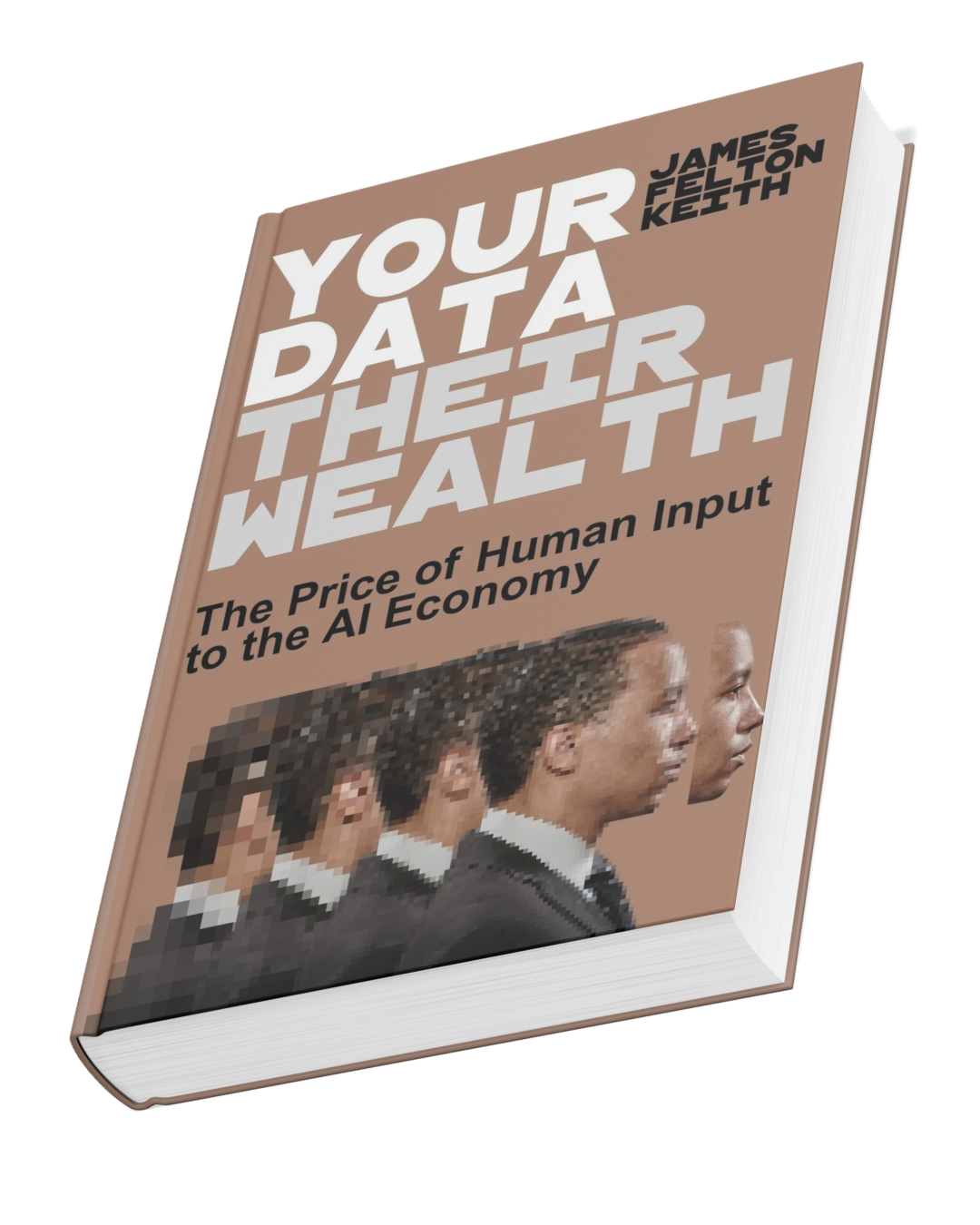
Part II: Trust Is Capital
One of the most persistent habits of modern political thought is the tendency to treat wealth as though it were the beginning of the story.
We see a billionaire and ask how the fortune was accumulated.
We see a corporation and ask how much revenue it generates.
We see inequality and ask how wealth should be distributed.
We see poverty and ask how wealth should be transferred.
Again and again, we begin with wealth itself.
Yet wealth is rarely the beginning of the story.
Before there is wealth, there must be cooperation.
Before there is cooperation, there must be trust.
Before there is trust, there must be institutions capable of making trust rational.
This is the insight that sits beneath the work of Daron Acemoglu, Simon Johnson, and James Robinson, and it may prove far more important to the future of artificial intelligence than any individual technological breakthrough.
When people summarize their work, they often say that prosperity depends upon institutions. That statement is true, but it can sound abstract. Institutions are frequently imagined as government agencies, legal frameworks, bureaucracies, or constitutions. While those things matter, they are not the ultimate point.
The deeper point is that institutions create trust.
A functioning court system creates trust that contracts will be honored.
Property rights create trust that ownership will be respected.
A university creates trust that knowledge can be transmitted across generations.
A stock exchange creates trust that buyers and sellers can transact according to common rules.
Accounting standards create trust that financial information can be compared and evaluated.
Scientific institutions create trust that claims can be tested and verified.
Trust is what allows strangers to cooperate at scale.
Without trust, economic life collapses into tribalism, coercion, and opportunism. People withdraw from participation because they have no confidence that participation will benefit them. Innovation slows because the rewards become uncertain. Investment declines because the future becomes unpredictable. Social cooperation weakens because institutions no longer appear legitimate.
Trust is therefore not merely a social virtue.
Trust is productive.
Trust creates economic value.
Trust creates political stability.
Trust creates opportunity.
Trust creates prosperity.
Trust is capital.
This insight becomes extraordinarily important when we examine the emerging AI economy because AI is fundamentally a trust problem disguised as a technology problem.
Technology companies often describe artificial intelligence as a computational achievement. Policymakers frequently describe it as a regulatory challenge. Investors describe it as an economic opportunity.
All three descriptions contain truth.
None fully captures the underlying issue.
The central question is whether people trust the institutions governing the value they create.
At present, the answer appears increasingly uncertain.
Most people do not know what data is being collected about them.
Most people do not know how that data is being used.
Most people do not know which models are trained on their contributions.
Most people do not know who profits from those contributions.
Most people do not know what rights they possess.
Most people do not know how to challenge decisions made about them.
Most people do not know whether they have any meaningful claim over the value generated from their participation.
The result is a system that increasingly resembles extraction.
Human beings continuously generate value.
Organizations continuously capture value.
The relationship between the two remains largely opaque.
This opacity produces distrust.
And distrust eventually produces political instability.
The remarkable thing about the current debate surrounding artificial intelligence is that both capitalism and democratic socialism attempt to address the symptoms of this problem without fully confronting its cause.
The capitalist instinct is to trust markets.
The assumption is that innovation should proceed as quickly as possible, that competition will discipline bad actors, and that economic growth will ultimately benefit society. If AI companies become wealthy, it is because they successfully created valuable products.
This perspective contains an important truth. Innovation matters. Risk-taking matters. Entrepreneurship matters. Wealth creation matters.
But capitalism frequently assumes that markets can generate trust on their own.
History suggests otherwise.
Markets require institutions.
Without institutions, markets become extractive.
Without institutions, information asymmetries become overwhelming.
Without institutions, bargaining power becomes concentrated.
Without institutions, ownership becomes detached from contribution.
Without institutions, legitimacy eventually erodes.
Democratic socialism begins from a different concern.
It recognizes concentration.
It recognizes extraction.
It recognizes inequality.
Its instinct is therefore to redistribute the gains.
If corporations accumulate excessive wealth, governments should reclaim a portion of that wealth and direct it toward public purposes.
This instinct contains an important truth as well.
Power does concentrate.
Markets do fail.
Public intervention is often necessary.
Yet democratic socialism frequently assumes that the primary challenge is distribution.
The underlying architecture of value creation receives less attention.
The focus shifts toward taxation, transfer payments, social programs, public ownership, and redistribution.
Again, these mechanisms matter.
But they occur after value has already been captured.
This is where I believe the debate surrounding artificial intelligence requires a new framework.
The challenge is not merely how wealth should be distributed.
The challenge is how ownership, participation, governance, and trust should be organized before extraction occurs.
Consider the difference.
Imagine two societies.
In the first society, corporations collect data, train models, generate enormous wealth, and then governments redistribute a portion of the gains through taxes and public programs.
In the second society, individuals possess recognized rights regarding their contributions from the beginning. They participate in governance. They possess bargaining power. They maintain visibility into how value is created. They retain ownership claims. They participate through institutions specifically designed to preserve agency.
Both societies may distribute wealth.
Only one distributes power.
This distinction is the foundation of Inclusionism.
Inclusionism is often misunderstood as a moral appeal for greater diversity, broader participation, or social fairness. While it certainly contains those elements, its deeper ambition is institutional.
Inclusionism asks a different question than either capitalism or democratic socialism.
Capitalism asks:
Who owns capital?
Democratic socialism asks:
How should the gains from capital be redistributed?
Inclusionism asks:
How do we ensure that people participate in ownership before value is extracted?
The difference is not rhetorical.
It is structural.
It changes where intervention occurs.
Capitalism intervenes at the point of investment.
Democratic socialism intervenes at the point of redistribution.
Inclusionism intervenes at the point of participation.
The goal is not merely to distribute wealth more fairly.
The goal is to distribute agency more fairly.
Agency precedes ownership.
Ownership precedes wealth.
Which means the most effective way to influence wealth distribution is often to influence agency distribution.
This realization led me toward what I have come to think of as the central challenge of the AI age.
The challenge is not building better algorithms.
The challenge is building better institutions.
If artificial intelligence derives value from human contribution, then we need institutions capable of recognizing, recording, protecting, governing, and rewarding that contribution.
The question is not whether those institutions will exist.
The question is whether we will build them deliberately or allow private interests to build them for us.
History suggests that societies capable of creating new forms of prosperity are usually societies capable of creating new forms of institution.
The corporation itself was once a new institution.
The stock exchange was once a new institution.
The public university was once a new institution.
The labor union was once a new institution.
The pension fund was once a new institution.
The central bank was once a new institution.
Each emerged because existing arrangements were incapable of managing new forms of economic complexity.
Artificial intelligence presents a similar challenge.
The existing institutional architecture was designed for industrial capital.
It was not designed for human contribution capital.
The AI economy therefore requires a new layer of infrastructure.
Not merely regulatory infrastructure.
Not merely technological infrastructure.
Institutional infrastructure.
The task before us is to design institutions that convert contribution into agency, agency into ownership, ownership into participation, and participation into legitimacy.
Only then can trust become sustainable.
Only then can prosperity become inclusive.
Only then can artificial intelligence become a tool for human flourishing rather than another mechanism for concentrated extraction.
The question, then, is not whether we need new institutions.
The question is which institutions we need.
That is where the architecture of Inclusionism begins.

Part III: The Architecture of Inclusion
Once we recognize that the challenge of the AI economy is fundamentally institutional, a different conversation begins to emerge.
The question is no longer whether artificial intelligence should be regulated.
The question is no longer whether AI companies should be taxed.
The question is no longer whether governments should own a larger share of technological wealth.
Those questions remain important, but they become secondary to a more foundational concern.
What institutions must exist if human contribution is to become a recognized source of ownership, agency, and participation?
This is where many discussions about the future begin to lose their footing. People are generally comfortable talking about rights in the abstract. They are comfortable discussing fairness, equality, innovation, and opportunity. The difficulty arises when those values must be translated into durable structures.
Rights without institutions are aspirations.
Ownership without institutions is symbolism.
Participation without institutions is rhetoric.
Every major economic transformation in history has required the creation of new institutional forms capable of organizing new forms of value.
The industrial era did not emerge because factories appeared.
It emerged because societies developed property systems, corporate structures, financial institutions, insurance markets, accounting standards, courts, labor organizations, transportation networks, and regulatory frameworks capable of supporting industrial production.
The information age required its own institutional infrastructure. Intellectual property systems expanded. Telecommunications law evolved. Universities became more central to economic development. Capital markets adapted to support technology firms. Standards organizations emerged to govern interoperability across increasingly complex networks.
Artificial intelligence requires a comparable institutional expansion.
The mistake many observers make is assuming that a single institution will solve the problem.
Some believe the answer is regulation.
Others believe the answer is public ownership.
Others believe the answer is stronger markets.
Others believe the answer is technological innovation itself.
History suggests otherwise.
Complex systems require ecosystems of institutions.
No single institution protects democracy.
No single institution protects markets.
No single institution protects science.
No single institution protects liberty.
Healthy societies rely upon networks of institutions that reinforce one another while preventing excessive concentrations of power.
The AI economy should be no different.
The first institution in this architecture is what I call the Human Value Rights Charter.
Every successful economic system begins by defining rights. Property rights created the foundation for industrial investment. Labor rights created the foundation for modern employment relationships. Civil rights created the foundation for broader participation in democratic society. The AI economy requires an equivalent declaration regarding human contribution.
The Human Value Rights Charter would establish a simple but transformative principle: individuals possess enforceable claims regarding the economic use of the contributions generated through their lives.
This does not mean every interaction becomes private property. It does not mean every conversation generates a royalty payment. It means that consent, attribution, participation, compensation, and governance become recognized dimensions of economic life rather than optional considerations left to corporate discretion.
Without a rights framework, every subsequent institution rests on unstable ground.
Rights establish legitimacy.
Legitimacy makes participation possible.
Participation makes ownership meaningful.
The second institution is the Human Value Protocol Authority.
This may sound technical, but standards are among the most powerful institutions ever created.
Most people never think about standards.
Yet modern life depends upon them.
Financial markets depend upon accounting standards.
The internet depends upon communication protocols.
Global trade depends upon legal standards.
Scientific collaboration depends upon research standards.
Standards determine how information moves, how value is measured, and how trust is maintained across large systems.
The AI economy currently lacks shared standards for contribution itself.
There is no universal language for documenting consent.
No universal language for documenting attribution.
No universal language for documenting participation rights.
No universal language for documenting value creation.
Without standards, every company creates its own system. Every platform becomes its own universe. Every citizen becomes dependent upon proprietary rules they neither control nor understand.
The Human Value Protocol Authority would serve the same role for contribution that accounting standards serve for finance.
It would create the common language necessary for a participatory AI economy.
The third institution is perhaps the most visible.
The Human Value Wallet.
Much attention has recently been devoted to digital identity systems. The European Union’s digital identity initiatives represent an important step forward in allowing individuals to control credentials and personal verification. Yet identity alone is insufficient.
Knowing who someone is does not tell us what they have contributed.
The Human Value Wallet would function as a living ledger of participation.
It would document permissions granted.
Licenses issued.
Communities joined.
Compensation received.
Governance rights exercised.
Contributions recognized.
Participation recorded.
The purpose is not surveillance.
The purpose is agency.
The wallet keeps the individual at the center of the system rather than allowing platforms to become the exclusive custodians of value records.
Ownership becomes portable.
Rights become portable.
Agency becomes portable.
The fourth institution is a network of Data Trusts and Data Cooperatives.
This institution emerges from a simple observation about power.
Individuals acting alone are weak.
Communities acting together are strong.
Modern economies have repeatedly solved this problem through collective institutions. Labor unions emerged because individual workers possessed limited bargaining power. Credit unions emerged because individual savers required collective mechanisms. Professional associations emerged because practitioners needed representation.
The AI economy requires similar structures.
Data Trusts allow individuals to pool rights while retaining ownership.
Data Cooperatives allow communities to negotiate collectively without surrendering authority to either governments or corporations.
Teachers may organize together.
Patients may organize together.
Artists may organize together.
Scientists may organize together.
Neighborhoods may organize together.
Cultural communities may organize together.
The objective is not collective ownership.
The objective is collective bargaining power.
The fifth institution is the AI Value Exchange.
One of the defining characteristics of today’s data economy is opacity.
Most people have little idea how value is created from their contributions.
Most people have little visibility into licensing arrangements.
Most people have little understanding of the economic chains connecting contribution to profit.
Healthy markets require transparency.
Property markets require transparency.
Capital markets require transparency.
Labor markets require transparency.
The AI economy requires transparency as well.
An AI Value Exchange would create a visible marketplace where human contributions can be licensed, valued, and governed under common standards.
The purpose is not to commodify every aspect of human life.
The purpose is to eliminate invisible extraction.
Visibility creates accountability.
Accountability creates trust.
Trust creates participation.
The sixth institution is the Human Input Registry.
Every mature economic system depends upon records.
Property ownership is recorded.
Corporate ownership is recorded.
Securities ownership is recorded.
Patents are recorded.
Licenses are recorded.
The AI economy currently treats contribution as though it emerges from nowhere.
The Human Input Registry would correct this.
Its purpose would be to document categories of contribution while protecting privacy. Individual contributions, community contributions, public contributions, cultural contributions, and professional contributions would become visible within a common framework.
Visibility is not merely administrative.
Visibility is political.
Things that remain invisible are easily exploited.
Things that become visible can be governed.
The seventh institution is the Algorithmic Audit Office.
Every system of value creation requires independent oversight.
The institution responsible for measuring value should not be the institution responsible for distributing value.
The institution responsible for licensing value should not be the sole institution auditing value.
Concentrated power inevitably produces conflicts of interest.
The Algorithmic Audit Office exists to address this reality.
Its role would include verifying data provenance, evaluating compliance with licensing agreements, monitoring compensation mechanisms, investigating exclusionary harms, and ensuring transparency throughout the value chain.
Trust requires verification.
Verification requires independence.
Independence requires institutions.
The eighth institution is the Public Benefit Fund.
This is the point at which Inclusionism partially converges with Sanders.
Some forms of value are inherently collective.
Public infrastructure contributes value.
Public research contributes value.
Shared culture contributes value.
National institutions contribute value.
Certain gains should therefore support public goods.
The difference is that the Public Benefit Fund is not the foundation of the system.
It is the consequence of the system.
In democratic socialism, redistribution often becomes the primary mechanism through which fairness is pursued.
In Inclusionism, redistribution remains important but follows participation rather than replacing it.
The Public Benefit Fund exists because ownership has already been distributed through earlier institutions.
Not because ownership failed to occur.
The ninth institution is the Human Value Ombudsman.
Every rights framework eventually produces disputes.
Every market eventually produces abuses.
Every institution eventually encounters failures.
Ordinary people require representation.
Not corporate representation.
Not government representation.
Human representation.
The Ombudsman serves as a defender of participation rights, investigating grievances, challenging abuses, and ensuring that contributors possess meaningful recourse against concentrations of power wherever they emerge.
Together these institutions create something larger than governance.
They create an architecture of trust.
That phrase deserves emphasis because it captures the deepest difference between Inclusionism and the ideologies that preceded it.
The purpose of these institutions is not simply to regulate behavior.
The purpose is not simply to redistribute wealth.
The purpose is to distribute trust.
Every institution expands the number of ways people can participate in economic life without surrendering ownership, agency, or dignity.
This is the insight that ultimately separates Inclusionism from both capitalism and democratic socialism.
Capitalism distributes ownership through capital.
Democratic socialism redistributes wealth through the state.
Inclusionism distributes agency through institutions.
Because agency precedes ownership.
Ownership precedes wealth.
And wealth, ultimately, follows trust.
The future of artificial intelligence will not be determined solely by the sophistication of its models.
It will be determined by whether the institutions surrounding those models remain inclusive.
History suggests that societies capable of expanding participation become prosperous.
History suggests that societies capable of distributing trust become stable.
History suggests that societies capable of transforming contribution into ownership become legitimate.
The AI age will be no exception.
The question is whether we will build the institutions necessary to meet it.

Part IV: The Architecture of Inclusion
Once we recognize that the central challenge of the AI economy is institutional, a different kind of conversation becomes possible. The question is no longer simply whether artificial intelligence should be regulated, whether AI companies should be taxed, or whether governments should own a larger share of technological wealth. Those questions remain important, but they are not the foundation. The deeper question is what institutions must exist if human contribution is to become a recognized source of ownership, agency, and participation.
This is where many conversations about the future begin to fail. People are often comfortable talking about fairness, privacy, innovation, accountability, and opportunity in the abstract. The difficulty begins when those values must be translated into durable structures. Rights without institutions are aspirations. Ownership without institutions is symbolism. Participation without institutions is rhetoric. If people are to possess meaningful agency over the value created from their data, then the AI economy cannot depend on goodwill, corporate ethics statements, or occasional government intervention. It requires an architecture.
Every major economic transformation has required new institutional forms capable of organizing new kinds of value. The industrial era did not emerge simply because factories appeared. It emerged because societies developed property systems, corporate structures, insurance markets, accounting standards, courts, labor organizations, transportation networks, financial institutions, and regulatory frameworks capable of supporting industrial production. The information age required its own institutional infrastructure: intellectual property law, telecommunications rules, standards bodies, venture capital markets, universities, and global protocols of exchange. Artificial intelligence requires a comparable expansion because it is organizing a new form of value: human contribution capital.
The mistake is to imagine that a single institution can solve the problem. Some people believe the answer is regulation. Others believe the answer is public ownership. Others believe the answer is competition, taxation, consumer protection, or technological innovation itself. History suggests otherwise. Complex systems require ecosystems of institutions. No single institution protects democracy. No single institution protects markets. No single institution protects science. No single institution protects liberty. Healthy societies rely on networks of institutions that reinforce one another while preventing power from collapsing into one set of hands. The AI economy should be no different.
The first institution in this architecture should be a Human Value Rights Charter. Every functioning economic order begins by defining rights. Property rights helped organize industrial capitalism. Labor rights helped organize the modern workforce. Civil rights helped broaden democratic participation. The AI economy requires an equivalent declaration regarding human contribution. Such a charter would establish that individuals possess enforceable claims regarding the economic use of the data, knowledge, creativity, behavior, and experience generated through their lives. This would not mean that every interaction becomes private property or that every sentence produces a royalty payment. It would mean that consent, attribution, compensation, participation, and governance become recognized dimensions of economic life rather than optional considerations left to corporate discretion.
The second institution should be a Human Value Protocol Authority. This may sound technical, but standards are among the most powerful institutions ever created. Most people do not think about standards because good standards disappear into the background of daily life. Financial markets depend on accounting standards. The internet depends on communication protocols. Global trade depends on legal and technical standards. Scientific collaboration depends on research standards. Standards determine how information moves, how value is measured, and how trust is maintained across large systems. The AI economy currently lacks common standards for documenting contribution, consent, attribution, compensation, licensing, and governance rights. Without standards, every platform creates its own private language, every company becomes its own jurisdiction, and every individual is forced to live inside systems they neither control nor understand.
The third institution should be the Human Value Wallet. Recent attention to digital identity systems, including Europe’s digital identity wallets, points in a useful direction but does not go far enough. Identity tells a system who someone is. It does not tell the system what that person has contributed, what permissions they have granted, what communities they belong to, what compensation they have received, or what governance rights they possess. A Human Value Wallet would not be a speculative crypto account or a corporate rewards program. It would be a legally recognized instrument of agency, allowing individuals to carry records of contribution, consent, licensing, compensation, and participation across platforms and institutions. The purpose is not surveillance. The purpose is portability. Agency must travel with the person rather than remain trapped inside the platform.
The fourth institution should be a network of Data Trusts and Data Cooperatives. This emerges from a simple fact about power: individuals acting alone are usually weak when facing trillion-dollar technology companies. Modern societies have repeatedly solved this problem through collective institutions. Labor unions emerged because individual workers lacked bargaining power. Credit unions emerged because individual savers needed collective mechanisms. Professional associations emerged because practitioners needed representation. The AI economy requires similar structures for data and human input. Data trusts would allow individuals to pool rights while retaining ownership. Cooperatives would allow communities, professions, creators, patients, workers, teachers, artists, and cultural groups to negotiate collectively without surrendering authority to corporations or the state.
The fifth institution should be an AI Value Exchange. One of the defining characteristics of today’s data economy is opacity. Most people have little idea how their information is acquired, transformed, licensed, monetized, or used to train systems that may later displace, profile, influence, or profit from them. Healthy markets require visibility. Property markets require visibility. Capital markets require visibility. Labor markets require visibility. The AI economy requires visibility as well. An AI Value Exchange would create a transparent marketplace where human contributions can be licensed, valued, and governed under standardized, auditable terms. The point is not to commodify every aspect of human life. The point is to eliminate invisible extraction by making transactions legible.
The sixth institution should be a Human Input Registry. Every mature economic system depends on records. Property ownership is recorded. Corporate ownership is recorded. Securities are recorded. Patents are recorded. Licenses are recorded. The AI economy currently treats contribution as if it emerges from nowhere. A Human Input Registry would help correct this by documenting categories of contribution while protecting privacy. It would distinguish individual data from community data, public-interest data from commercial data, creative works from behavioral signals, professional expertise from biometric information, and human-generated input from synthetic derivatives. Visibility is not merely administrative. It is political. What remains invisible can be exploited. What becomes visible can be governed.
The seventh institution should be an Algorithmic Audit Office. Any system that creates value at scale requires independent oversight, especially when the institutions measuring value are not the same institutions distributing value. The entity licensing data should not be the sole auditor of how that data is used. The company profiting from AI models should not be the only authority determining whether contributors were treated fairly. The Algorithmic Audit Office would verify data provenance, assess compliance with licensing agreements, monitor compensation mechanisms, investigate exclusionary harms, and examine whether AI systems are producing benefits in ways consistent with the rights of contributors. Trust requires verification, and verification requires independence.
The eighth institution should be a Public Benefit Fund, but this fund should not replace individual ownership. This is the point at which Inclusionism partially overlaps with Sanders’s instinct while departing from his structure. Some forms of value are inherently collective. Public research contributes value. Public infrastructure contributes value. Shared culture contributes value. Civic institutions contribute value. Certain gains should therefore support public goods. But in an Inclusionist architecture, the Public Benefit Fund is not the foundation of the system. It is one layer within a broader system that has already recognized individual and group agency. Redistribution remains important, but it follows participation rather than replacing it.
The ninth institution should be a Human Value Ombudsman. Every rights framework eventually produces disputes. Every market produces abuses. Every institution fails someone. Ordinary people therefore need representation capable of challenging both corporate abuse and governmental overreach. The Ombudsman would defend participation rights, investigate grievances, represent individuals and communities, and ensure that contributors possess meaningful recourse when institutions fail. Without such an institution, the system risks becoming another elegant architecture that ordinary people cannot actually use.
Together, these institutions form something larger than a regulatory regime. They form an architecture of trust. That phrase matters because it captures the deepest difference between Inclusionism and the ideologies that preceded it. The purpose of these institutions is not simply to regulate behavior or redistribute wealth. Their purpose is to distribute agency. Each institution expands the number of ways individuals and communities can participate in economic life without surrendering ownership, dignity, or power.
This is the point at which Inclusionism separates itself most clearly from both capitalism and democratic socialism. Capitalism distributes ownership through capital. Democratic socialism redistributes wealth through the state. Inclusionism distributes agency through institutions. The difference is not semantic. Agency precedes ownership, ownership precedes wealth, and wealth ultimately follows trust. If we want a different distribution of wealth in the AI economy, we cannot wait until after extraction has occurred. We must distribute rights, bargaining power, recognition, accountability, and governance at the beginning.
The future of artificial intelligence will not be determined only by the sophistication of its models. It will be determined by whether the institutions surrounding those models are inclusive or extractive. Societies that expand participation become prosperous. Societies that distribute trust become stable. Societies that transform contribution into ownership become legitimate. The AI age will be no exception. The question is whether we will build the institutions necessary to meet it.