

Did you see the Open AI paper: Industrial Policy for the Intelligence Age. It calls for the “Public Wealth Fund” which is a Universal Basic Income structure.

I have published two working papers on the question too many people in the AI economy still want to walk around: how do we calculate the value of human input before the winners of this new age decide what the public is “owed”?
The first paper, The Informational Factor of Production and the Systematic Mispricing of Personal Data Inputs, makes the basic case that personal data is not some ghost floating above the economy. It is an input. It belongs in the production function. The second, Beyond Informational Stock: Collective Readiness, Founder Residuals, and the Misallocation of Value in AI-Era Production, pushes further and argues that even where informational value is acknowledged, too much of the reward is still assigned to founders, firms, and legal shells, while the broader public conditions that made that value possible remain undercounted or ignored.
[PAPER 1: The Informational Factor of Production and the Systematic Mispricing of Personal Data Inputs]
[PAPER 2: Beyond Informational Stock: Collective Readiness, Founder Residuals, and the Misallocation of Value in AI-Era Production]
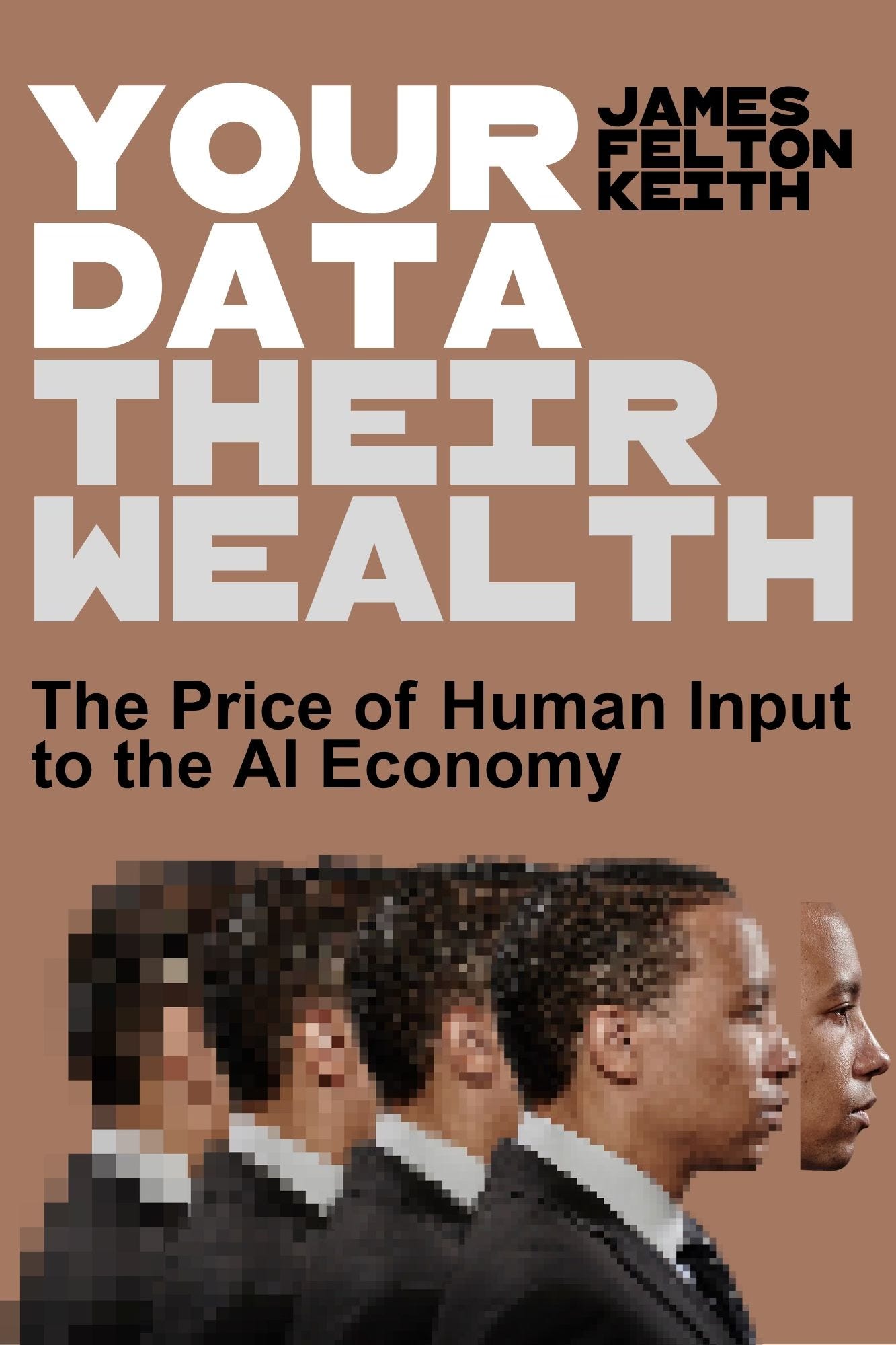
These papers come ahead of my forthcoming book, Your Data Their Wealth: The Price of Human Input to the AI Economy, to be published June 19, because the old lie is wearing thin.
The old lie says wealth in the AI era comes from code, capital, and genius.
The truth is plainer than that.
The people are in the machine.
The crowd is in the code.
The public is in the product.
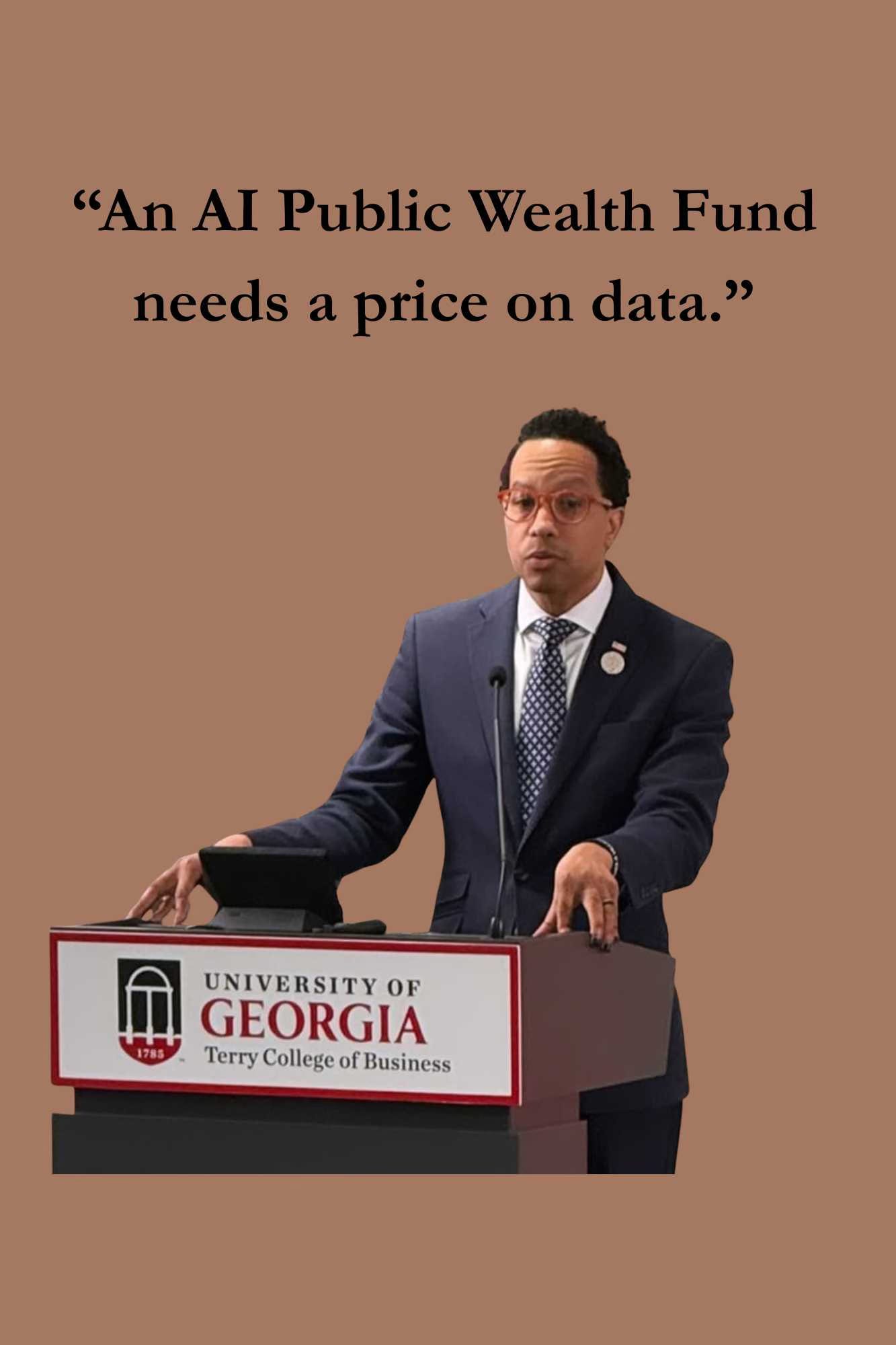
And now even OpenAI, in its new industrial policy paper, is inching toward admitting it. On page 7, OpenAI calls for a “Public Wealth Fund” so that every citizen, including those not already invested in financial markets, can have a stake in AI-driven economic growth. It says policymakers and AI companies should determine how to seed such a fund, invest it in long-term assets tied to AI companies and adopting firms, and distribute the returns directly to citizens.
That is not nothing.
It is an admission.
An admission that the public is in the value chain.
An admission that AI wealth is not arriving by immaculate conception.
An admission that the fortunes being built in this age are not purely private miracles.
Fine. Good. Let us start there.
But let us not stop there.
Because a Public Wealth Fund without an independent institution to price the human contribution is not justice. It is discretion. It is still the same old arrangement: the people help build the wealth, the powerful name the price, and then the people are handed back a portion of what they were never allowed to measure.
That is not ownership.
That is an allowance.
And I am not talking about allowances. I am talking about accounting.
This is where the AI debate is still soft. Too soft. Everybody wants to talk about safety, innovation, national competition, and economic growth. Everybody wants to sound responsible while avoiding the oldest question in political economy:
Who produced the value?
Who captured the value?
Who got the power to name its price?
That question did not disappear when the factory became the platform.
It did not disappear when labor became digital.
It did not disappear when human contribution became behavioral, inferential, ambient, and predictive.
It only became easier to hide.
For years, I have argued that data is labor not as a slogan, but as a measurable fact of modern production. What firms politely call user engagement, product telemetry, personalization, model training, market fit, network effects, and behavioral signals are not acts of God. They are the converted residue of human life. They are our language, our movement, our habits, our preferences, our timing, our relations, our communities, our uncertainty reduced into somebody else’s margin.
That is why I do not have much patience for the fairy tale that AI-era wealth is born only from founders and funding rounds.
No.
The public taught the machine.
The public filled the datasets.
The public generated the patterns.
The public made the market legible.
And if the public is constitutive of the value, then the public is on the cap table whether the market has the courage to say so or not.
This is why OpenAI’s Public Wealth Fund proposal is important but incomplete. The company is right to say the public should share in AI-driven growth. But sharing is not pricing. Distribution is not valuation. A fund is not a method. A check is not a theory of justice.
You cannot build a serious Public Wealth Fund on sentiment.
You cannot build it on vibes.
You cannot build it on voluntary self-reporting from the same firms extracting the value.
And you certainly cannot build it on the assumption that the beneficiaries of mispricing will suddenly become the referees of fair price.
What is missing is an independent pricing institution.
Call it an authority. Call it a standard-setting body. Call it a regulated market utility. Call it a new class of independent valuation firms. The name matters less than the function.
Its job would be simple to state and hard to fake.
What value was created?
Which firms captured it?
What portion depended on personal data and other forms of distributed human informational input?
What is the defensible price of that input?
And what portion of that priced value should be structured into a Public Wealth Fund before it disappears entirely into private capitalization?
That is the missing layer.
Not charity. Price formation.
Not philanthropy. Measurement.
Not gratitude. Structure.
My work has been moving toward exactly that layer. The first paper argues that informational stock should be treated as an independent factor of production because leaving it out systematically misattributes value to capital. The second argues that even after recognizing informational stock, valuation still over-rewards founders and legal shells while neglecting collective readiness: the social and institutional conditions that make scale possible at a given moment.
In plain English, the problem is not merely that people are underpaid.
The deeper problem is that the whole market is miscounting who and what produced the value.
That is why the next institution cannot merely be a fund.
It must be a pricing body.
A Public Wealth Fund needs an independent data-pricing authority.
Because if the people are good enough to generate the value, they are good enough to have that value measured before someone else decides what their share should be.
That is the line between dignity and dependency.
That is the line between ownership and permission.
That is the line between a citizen and a subject.
OpenAI has now put one part of the argument on the table. Good. Let the table get larger. Let the arithmetic get harder. Let the era of hand-waving end.
The public does not just deserve a dividend from AI.
The public deserves a price.
And once the public has a price, it has a claim.
And once it has a claim, this whole economy will have to tell the truth about who built it.
Pre-Order my the forthcoming book
Your Data Their Wealth: The Price of Human Input to the AI Economy