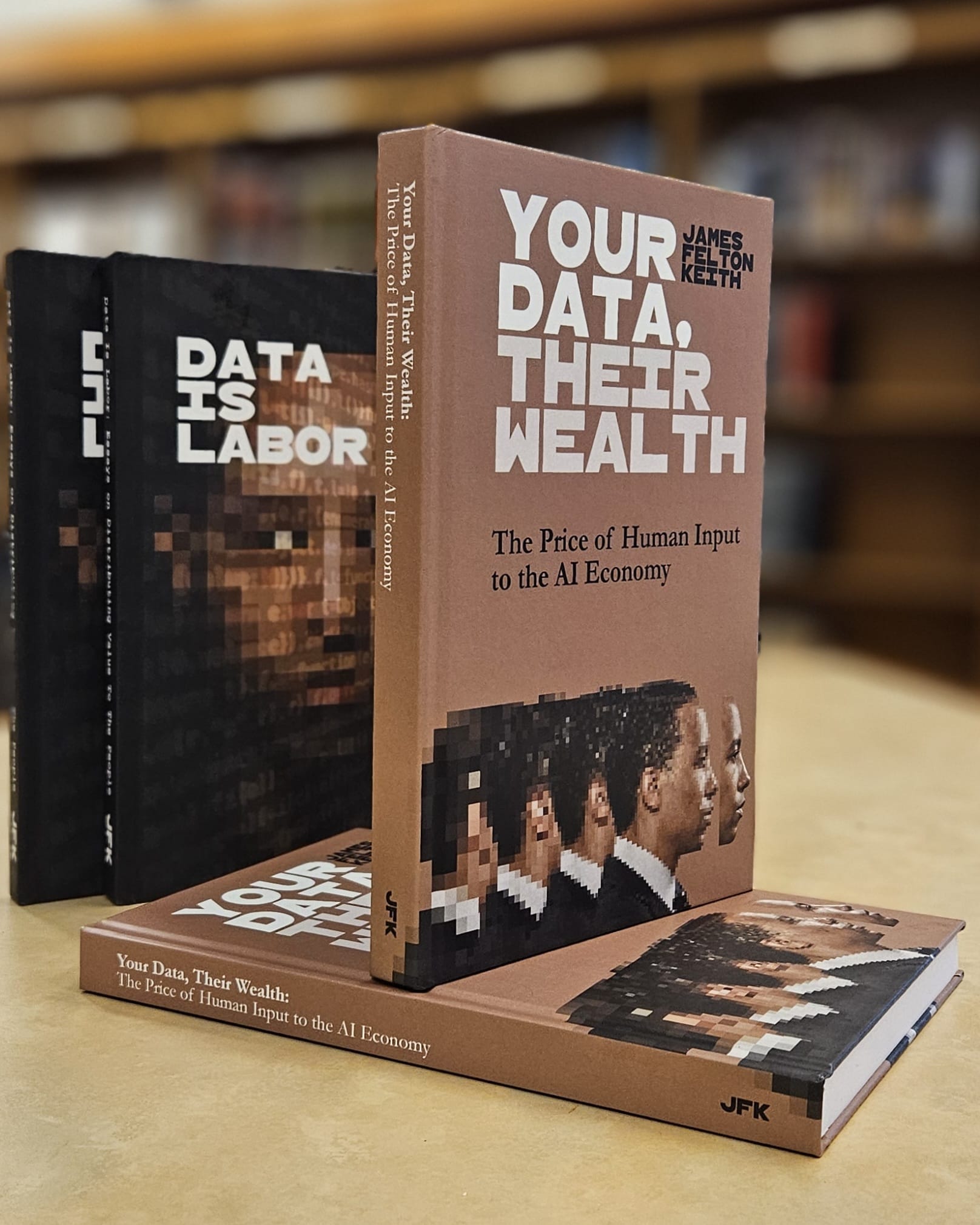
When I wrote Data Is Labor and later Your Data, Their Wealth, I argued that artificial intelligence does not emerge from computation alone. It emerges from people. Every prompt, correction, preference, conversation, reaction, hesitation, and expression of emotion becomes an input into the production of increasingly valuable intelligent systems. That argument has often been misunderstood as one about privacy. It never was. It has always been about labor.
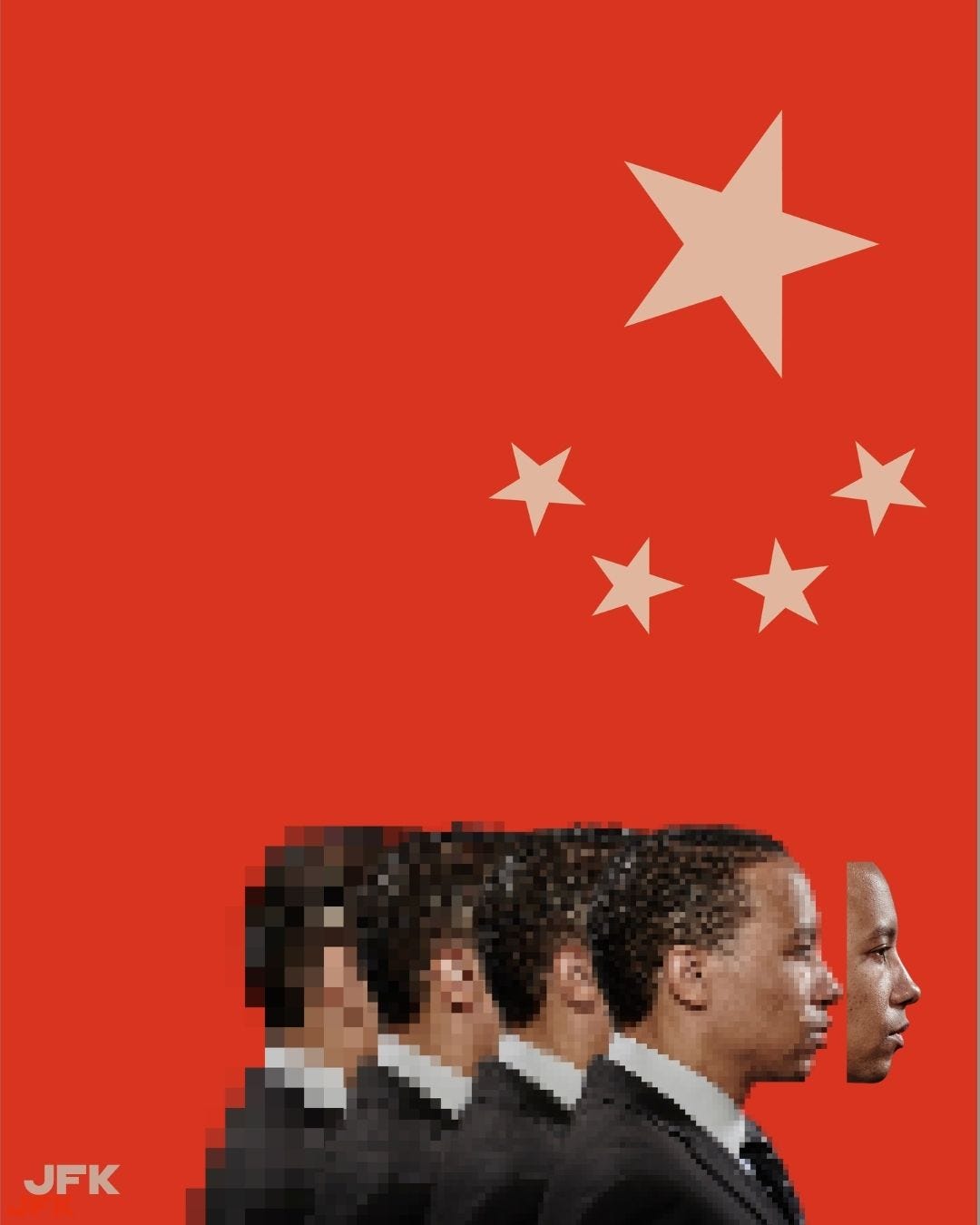
China’s new Interim Measures for the Administration of AI Anthropomorphic Interaction Services, which took effect in July 2026, may become one of the most consequential AI regulations ever enacted—not because it governs algorithms, but because it governs relationships. The regulations require providers of anthropomorphic AI to disclose when users are interacting with artificial intelligence, implement safeguards against emotional manipulation and addiction, intervene when users appear to be in psychological distress, protect minors, and prohibit particularly exploitative forms of human-machine interaction. Whether one agrees with China’s broader political system is beside the point. The regulation acknowledges something that most AI policy has largely ignored: conversations with artificial intelligence have social consequences.
That recognition is more important than it first appears.
For years, governments have treated AI as software. China has treated it, at least in this context, as a social actor. Once policymakers conclude that AI can influence emotional attachment, trust, dependency, and human decision-making, they have already accepted a much deeper premise: interactions between humans and AI matter. They shape both people and machines.
The economic implications of that observation are profound.
Every emotionally intelligent chatbot improves because millions of people patiently teach it how to comfort someone experiencing grief. Every AI assistant becomes more persuasive because users continually reveal what earns trust. Every educational model improves because students expose where explanations fail. Every enterprise assistant becomes more competent because employees demonstrate institutional knowledge through repeated interactions. Every AI companion becomes more human because humans continuously perform humanity for it.
These exchanges are commonly described as “usage.” Economically, they are production.
This is the central argument of Data Is Labor. Artificial intelligence transforms human interaction into machine capability. The productive input is no longer limited to data collected in the past. It includes the continuous informational contributions people make every time they interact with intelligent systems. Those interactions teach models, refine outputs, improve performance, and increase commercial value. What appears to be casual conversation is often productive economic activity.
China’s regulation recognizes the relationship. It does not yet recognize the labor embedded within it.
That distinction matters because the next great debate over artificial intelligence will not be about whether machines think. It will be about whether the people who continually improve those machines are participating in the wealth they create.
This is where organized labor should be paying close attention.
For more than a century, collective bargaining has focused on wages, hours, benefits, safety, and working conditions. Workers negotiated for a share of productivity gains because their labor increased the output of factories, offices, hospitals, schools, and transportation systems. As productivity rose, organized labor sought to ensure that workers shared in the wealth they helped create.
Artificial intelligence changes the nature of that productivity.
Today’s employees contribute far more than their time and physical effort. Every email drafted with an AI assistant, every prompt refined, every correction supplied to a model, every workflow optimized, every exception handled, and every piece of institutional knowledge transferred into an enterprise AI system increases that organization’s growing stock of machine intelligence. Employees are no longer simply performing work. They are continuously building productive capital.
Throughout history, unions have organized around the places where workers collectively created value: factories, mines, railroads, offices, hospitals, and schools. The twenty-first century workplace has introduced a new means of production: enterprise artificial intelligence. Every employee who interacts with these systems contributes to their capability. Collectively, workers are creating an asset that becomes more valuable with every interaction.
If workers are collectively building that asset, organized labor has a legitimate basis to collectively bargain over the wealth it produces.
This represents an entirely new frontier for collective bargaining.
Rather than negotiating only over protection from automation, unions can negotiate over participation in AI-generated productivity. Collective bargaining agreements could require employers to measure informational contributions to enterprise AI, share productivity gains attributable to those systems, establish informational dividend funds, negotiate royalty-like compensation tied to persistent model improvements, or create employee ownership mechanisms linked to the long-term value generated through human-AI collaboration.
This is not a radical departure from the history of organized labor. It is its logical evolution.
Workers have always bargained over the value they create. Artificial intelligence simply changes how that value is produced, accumulated, and measured.
Ironically, while much of the democratic world continues debating whether AI threatens employment, it has paid far less attention to the reality that workers are already producing AI every day. Every interaction contributes to a growing body of institutional intelligence that organizations own, monetize, and deploy. Yet those contributions remain largely invisible within accounting systems, labor law, and collective bargaining agreements.
China’s regulation unintentionally exposes that contradiction.
Its objective is social stability, not labor economics. Nevertheless, by recognizing that human-AI relationships possess sufficient importance to regulate, it implicitly acknowledges that those relationships generate real consequences. If interactions with artificial intelligence can reshape human behavior, they can also reshape economic value. Once we recognize that value is being produced, questions of ownership, attribution, and compensation inevitably follow.
This is the broader argument of Your Data, Their Wealth. Artificial intelligence does not simply consume electricity, semiconductors, and cloud infrastructure. It continuously absorbs human judgment, creativity, empathy, expertise, language, identity, and lived experience. Those informational contributions become part of increasingly valuable commercial systems. The resulting wealth is measurable. The individuals who generate it rarely participate in its distribution.
China has begun regulating the social relationship between humans and artificial intelligence.
Democratic societies should lead by regulating the economic relationship.
The question is no longer whether artificial intelligence will replace workers.
The question is whether workers will recognize that they are already building it.
The first nation to acknowledge that informational labor deserves recognition, attribution, and collective bargaining rights will not simply lead the AI economy. It will redefine the relationship between capital and labor for the twenty-first century.